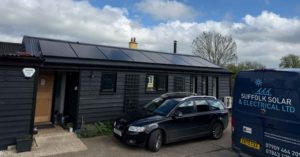
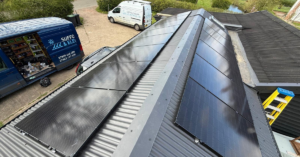
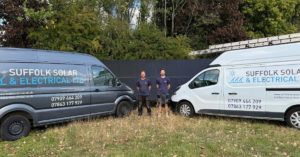
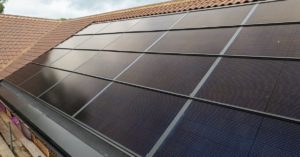
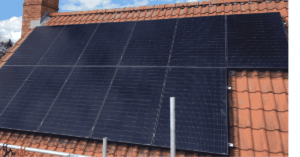
Suffolk is full of beautiful older properties. From Victorian terraces in Ipswich to timber-framed farmhouses in the countryside, period cottages in Woodbridge to Edwardian semis in Stowmarket – the county has an extraordinarily varied housing stock, much of it well over a hundred years old.
And increasingly, the owners of these homes are asking the same question: can I get solar panels installed on an older property?
The honest answer is that in most cases, yes – but there are some important things to consider before going ahead. Older homes present different challenges to modern new-builds, and getting the installation right requires a bit more care, knowledge and planning.
Here’s what you need to know.
Start With the Roof
The most important starting point for any solar installation on an older home is the condition of the roof itself.
Modern homes are built to consistent standards, with roofs that are relatively straightforward to assess. Older properties are different. Roofs may have been repaired or replaced piecemeal over the decades, timbers may have moved or weakened over time, and the original materials – clay tiles, slate, plain tiles – vary significantly in their condition and load-bearing capacity.
Before any solar system is designed or installed, a proper survey of the roof is essential. You need to know that the structure is sound enough to support the panels, that the fixing points can be installed securely, and that the roof covering itself is in good enough condition to last the lifetime of the system.
Installing solar on a roof that needs attention in the near future isn’t advisable – you’d face the cost and disruption of removing and reinstalling the panels when the roof work is eventually carried out. Better to address any roofing issues first, then install solar on a solid foundation.
Consider the Roof Material
Older homes in Suffolk feature a wide variety of roofing materials, and some require more specialist knowledge to work with than others.
Plain clay tiles and natural slate are common across the county and can both accommodate solar panels well – but the fixings need to be appropriate for the material, and care needs to be taken not to damage tiles during installation. A good installer will know exactly how to work with these materials without compromising the integrity of the roof.
Thatched roofs are a different matter entirely. Solar panels cannot be installed on a thatched roof – both for practical reasons and because of the significant fire risk. If your home has a thatched roof, solar may not be an option for your main roof, though ground-mounted systems or outbuildings may offer an alternative worth exploring.
For flat-roofed extensions – increasingly common even on older properties – solar can often be installed using ballasted mounting systems that don’t require penetrating the roof covering at all.
Listed Buildings and Conservation Areas
This is an area where many owners of older homes have questions – and understandably so.
If your property is a listed building, you will almost certainly need listed building consent before installing solar panels. The rules vary depending on the listing grade and the local planning authority, so it’s important to check with your local council before proceeding. Installing without consent on a listed building is a serious matter and not something any reputable installer should encourage.
If your home sits within a conservation area, permitted development rights – which normally allow solar installation without planning permission – may be restricted, particularly if the panels would be visible from the street. Again, checking with your local planning authority before going ahead is essential.
It’s worth noting that attitudes to solar in conservation areas have been gradually evolving, and in some cases approval is more straightforward than homeowners expect. The key is to check first rather than assume either way.
At Suffolk Solar & Electrical, we’ll always advise you honestly on the planning position for your property before any work is designed or quoted – so there are no surprises further down the line.
What About the Electrics?
Older homes often have older electrical systems – and a solar installation needs to connect safely and correctly to your property’s consumer unit and wiring.
In some cases, older consumer units may need upgrading before a solar system can be installed properly. This isn’t as daunting as it sounds, and it’s something a qualified electrical team can assess and address as part of the overall project. As both solar installers and qualified electricians, this is something we handle regularly – it means the whole job is managed by one team rather than having to coordinate between separate contractors.
If your home still has older wiring – rubber-insulated cables, for example – this is also worth flagging early, as it may affect how the installation is approached.
Roof Orientation and Shading
Older homes weren’t designed with solar in mind, and their roofs sometimes present orientation challenges that newer properties don’t.
A south-facing roof at the right pitch is ideal – but many period homes have complex roof structures with multiple pitches, dormers, chimneys and valleys that affect where panels can be placed and how much shading they’ll experience at different times of day.
This is another reason why a thorough survey matters so much on older properties. A well-designed system will work around these constraints, positioning panels where they’ll perform best and avoiding areas where shading would significantly reduce output.
Don’t be put off if your roof isn’t perfectly south-facing – east and west-facing installations can still deliver excellent results, particularly when combined with battery storage.
Battery Storage Is Worth Considering
For older homes that may have more complex roofs with less available panel space, battery storage becomes even more valuable.
If the number of panels you can fit is limited by the roof layout, a battery ensures you make the most of every unit of electricity those panels generate – storing surplus daytime power for use in the evening rather than exporting it back to the grid.
It’s a particularly smart combination for older properties where maximising the return from a smaller system matters most.
Older Homes Can Be Excellent Solar Properties
It’s easy to assume that period properties and modern technology don’t mix well – but in our experience, that’s rarely true.
Many older homes have large, well-pitched roofs with good south-facing aspects. They’re often set in generous plots without close neighbouring buildings causing shading issues. And their owners tend to be exactly the kind of long-term thinkers for whom solar makes the most sense – people who are invested in their property and thinking about its future.
With the right survey, the right system design, and an installer who understands the specific challenges of older buildings, solar can work beautifully on a period property.
Own an Older Home in Suffolk? Let’s Have a Conversation.
If you’re wondering whether solar would work for your property – whatever its age or condition – the best place to start is with a free survey from our team.
We’ve installed solar systems on all kinds of properties across Suffolk, from modern new-builds to older period homes, and we understand the additional care and planning that older buildings sometimes require. We’re MCS accredited, we’re qualified electricians as well as solar installers, and we’ll always give you honest advice about what’s possible for your specific property before you commit to anything.
We work across: 📍 Ipswich · 📍 Woodbridge · 📍 Stowmarket · 📍 Surrounding Suffolk areas
Get in touch to arrange your free, no-obligation survey. We’d love to help.