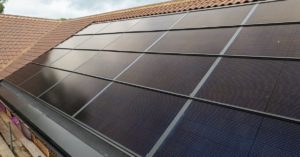
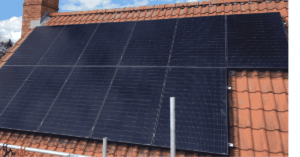
If you’ve ever wondered what actually happens once solar panels are installed on your roof, you’re not alone.
Many people like the idea of solar – lower bills, cleaner energy, more independence – but feel unsure about how it all works in practice. What powers what? Does your home switch between solar and the grid? And what happens when the sun goes down?
So we thought we’d walk you through it, step by step, in plain English.
This is how solar energy powers your home – from the moment sunlight hits your roof to the electricity you use every day.
Solar Works on Daylight, Not Heat
One of the biggest myths around solar is that it only works when it’s hot or sunny. In reality, solar panels generate electricity from daylight, not temperature. That means they’ll still work on overcast days – and often perform very efficiently in cooler weather.
Once daylight hits your panels, the process begins.
Step 1: Turning Daylight into Electricity
Your solar panels are made up of photovoltaic (PV) cells. When daylight hits these cells, it creates an electrical current.
At this stage, the electricity is generated as DC power (direct current), which your home can’t use just yet. That’s where the inverter comes in.
Step 2: The Inverter Does the Heavy Lifting
The inverter is one of the most important parts of a solar system.
Its job is to convert the DC electricity produced by your panels into AC power (alternating current) – the type of electricity used by your lights, appliances, sockets and heating controls.
Once converted, that energy is ready to be used instantly inside your home or business.
Step 3: Powering Your Home First
Here’s something many people don’t realise:
Your home always uses solar energy first.
As soon as your panels generate electricity, it’s sent straight to whatever is running at that moment – lights, kettle, washing machine, office equipment, workshop tools, and so on.
This is where the biggest savings come from: using your own clean energy instead of buying it from the grid.
Step 4: Storing Extra Energy with a Battery (If You Have One)
If your solar panels produce more energy than you’re using at the time, the excess doesn’t go to waste.
If you have battery storage, that extra electricity is stored safely for later use. Think of it as your own personal energy savings account.
Later in the day – especially in the evening or overnight – your home can draw from the battery instead of the grid.
This is particularly useful in winter, when solar generation happens earlier in the day but most energy use happens after dark.
Step 5: What Happens When the Sun Goes Down?
Once the sun sets, your panels stop generating electricity – but that doesn’t mean your home goes without power.
If you have a battery:
- Your home automatically switches to stored energy first
- The transition is seamless – you won’t notice it happening
If the battery runs low, or if you don’t have one:
- Your home draws electricity from the grid as usual
Everything happens automatically. There’s no manual switching or complicated controls to manage.
Step 6: Exporting Energy Back to the Grid
If your battery is full and you’re not using all the energy your panels are producing, the excess is exported back to the grid.
Through the Smart Export Guarantee (SEG), you’re paid for this exported electricity. It won’t replace your savings, but it’s a useful bonus that adds extra value over time.
How Everything Works Together
A modern solar system is designed to balance all of this automatically:
- Panels generate electricity
- Your home uses it first
- Excess goes into the battery
- Any surplus is exported
- The grid steps in only when needed
From your point of view, the system just works in the background – lowering bills, reducing reliance on the grid, and giving you more control over your energy.
Most systems also include an app, so you can:
- See how much energy you’re generating
- Track usage throughout the day
- Monitor battery levels
- View savings and export figures
What Changes Inside Your Home?
One of the most reassuring things for homeowners is this: Very little changes day-to-day.
You don’t need to change how you use electricity. You can still run appliances as normal, charge devices, cook meals, and heat your home just as you always have.
The difference is that much of that energy is now coming from your roof instead of the grid.
Why a Tailored System Matters
Every home, business and farm uses energy differently.
That’s why we don’t believe in one-size-fits-all systems or headline prices. A well-designed solar setup considers:
- Roof size and orientation
- Daily and seasonal energy use
- Whether battery storage makes sense
- Future plans (EV chargers, extensions, business growth)
A tailored system ensures:
- Better efficiency
- Better savings
- Better long-term performance
This applies just as much to commercial and industrial properties as it does to homes. Businesses often have higher daytime usage, while farms may benefit from stored energy overnight – and systems should be designed accordingly.
Who Designs and Installs the System Matters
Solar isn’t just about the technology – it’s about the people installing it.
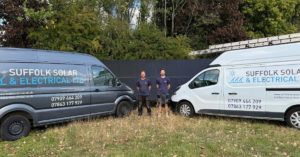
At Suffolk Solar & Electrical, we’re a family-run, MCS-certified team who take the time to design each system properly and install it with care.
We work across:
- Homes
- Businesses
- Farms and agricultural buildings
And whether we’re installing on a modern roof or a heritage building, the approach is always the same:
- No shortcuts
- No pressure
- No jargon
- Just honest advice and quality workmanship
Powering Your Home the Smart Way
Solar energy isn’t about changing your lifestyle- it’s about powering it more smartly. By generating your own electricity, storing what you don’t use straight away, and relying less on the grid, solar gives you:
- Lower energy bills
- More independence
- Greater control
- A cleaner way to power your home or business
And once it’s installed, it simply gets on with the job.
Curious About Solar for Your Home or Business?
If you’re thinking about solar and want to understand how it would work for your property, we’re always happy to help.
We offer free, no-pressure surveys across Suffolk and will talk you through everything clearly – from system design to savings – with no obligation.
📍 Ipswich | Woodbridge | Stowmarket | Surrounding areas